
Before the Potato
On Amazon, from $4.99

A Food History · Jeffrey Gray

Before thePotatoWhat Medieval Peasants Ate, How They Stored It, and What You Can Learn from Them

History you can eat. A food history of the medieval peasant diet, with 25 modern-kitchen recipes, food storage without refrigeration, and a 30-day pantry that still works when the power is out.

On Amazon, in Kindle, paperback, and hardcover. The hardcover is the one made to give.

  • Kindle eBook
  • Paperback
  • Hardcover

246 pages · Published November 24, 2026

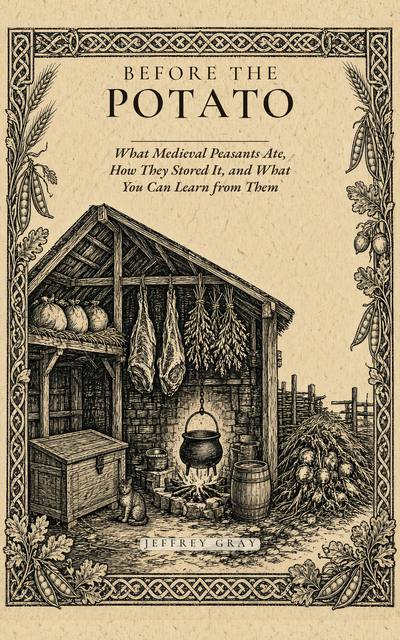
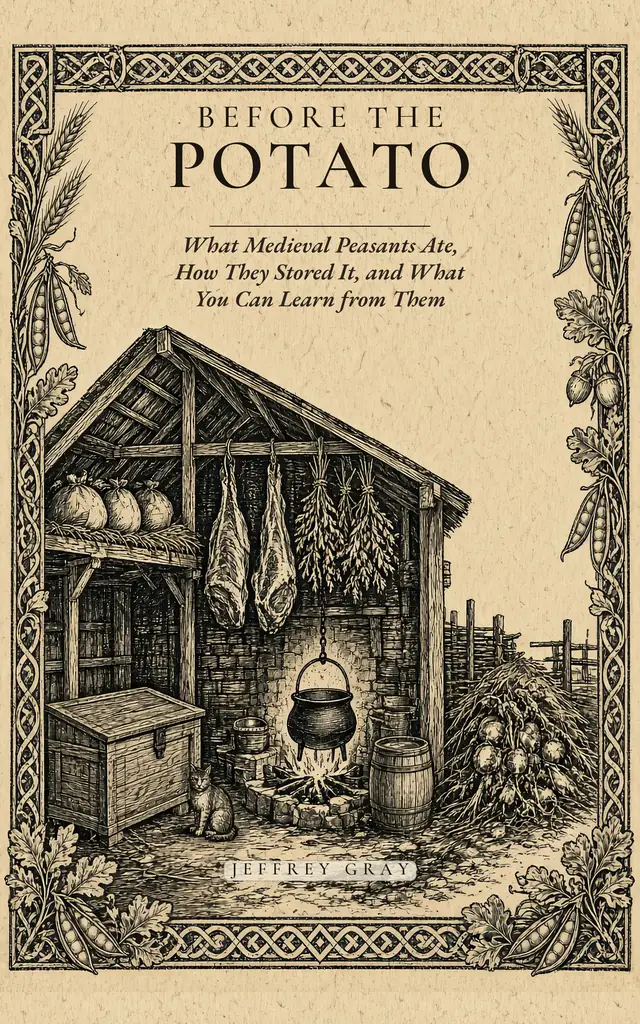
Cover of Before the Potato by Jeffrey Gray: an engraved winter cottage with a cauldron over the fire, salted meat and herbs hanging from the rafters, sacks in the loft, a grain chest, a cat, and a heap of stored roots, framed by wheat and pea vines

What You Can Actually Do With It

Twenty-five recipes, adapted for the modern kitchen, sit at the close of the chapters that need them. Most chapters also include a short, calm plan for keeping a month of food in an ordinary cupboard, using food-safe containers you can buy today. That is a 30-day pantry, not a bunker. The modern guidance follows current USDA and National Center for Home Food Preservation advice, with safety notes throughout.

The Year 1314

Medieval peasant food, one season at a time

In the autumn of 1314, the Ruddocks of Wargrave, a family on the Thames in Berkshire, bring in the harvest and begin the long work of making it last. Over the next year and a half they salt the pig, pack the loft, keep Lent, brew their ale, and watch the rain ruin the next harvest as the Great Famine of 1315 to 1317 closes in.

This is a food history, not a novel. To show how a real village year worked, the book follows one household, the Ruddocks of Wargrave, a family on the Thames in Berkshire, through 1314 and 1315. The Ruddocks are a composite, built from the record so the year can be told as one story. Their world is not invented. It is drawn from sources that run from Domesday Book to the chronicles of the famine years, and the chapters follow that year month by month through the old English calendar.

Before the Potato is an almanac of the medieval English peasant year. It explains what people ate, how they kept it through winter and the hungry gap (those lean spring weeks when the stores run low and nothing new is ready yet), and why it worked. Where the year calls for it, chapters close with recipes for the modern kitchen.

A history to read by the fire, and a pantry plan to use the next morning.
Inside the Book

Peasant recipes, medieval food preservation, and a few myths set straight

  • I

    Everyday dishes, adapted

    Pottage, the thick stew of grain, dried peas, vegetables, and herbs on every peasant table. Maslin bread, baked from a mixed crop of wheat and rye. Cabbage and leeks, Lenten peas, and an unhopped small ale, all written for today’s stove.

  • II

    Food storage without refrigeration

    Salt, smoke, cold, a dry loft, and the crock, carrying food from Michaelmas, the feast on 29 September when rent fell due, all the way to Lammas on 1 August, when bread from the new wheat was blessed.

  • III

    Root cellar know how

    How turnips, parsnips, carrots, and cabbages were kept cool and alive in a cellar, a pit, or a clamp, which is simply a heap of roots covered with straw and earth.

  • IV

    The village ladder

    Who held a yardland, the standard peasant holding of roughly 30 acres, who held only a cottage and a garden, and what rent day took from each of them.

  • V

    A table before the Americas

    No potatoes, no tomatoes, and none of the New World beans, like navy and pinto, that fill grocery shelves today. What filled the pot instead.

  • VI

    Myths set straight

    Rotten meat hidden under spices, a population that never drank water, and what “corn” meant in 1314. (Hint: it was not maize.)

What You Can Learn

A calm 30-day pantry that still works when the power is out

Medieval households packed for months at a time because they had to. Most chapters of Before the Potato include a short, calm plan for doing a modest version of the same thing: keeping a month of food in an ordinary cupboard.

  • A 30-day pantry, not a bunker
  • Built on current USDA and National Center for Home Food Preservation guidance
  • Safety notes throughout
  • Works when the power is out

Short guides from the book: what medieval peasants ate, how they stored food without refrigeration, a 30-day pantry that still works when the power is out, and what people in Europe ate before potatoes.

The Contents

Four parts, fourteen chapters, one peasant year

Part I. The Table

  1. August 1314: Harvest, and the table it fed
  2. Michaelmas 1314: Rent day, the market, and the village ladder

Part II. The Year

  1. October 1314: How the year worked
  2. Martinmas 1314: Salt, vessels, and the pig
  3. Christmas to Candlemas, 1314 to 1315: The winter larder
  4. Lent, February to April 1315: The hungry gap
  5. May to July 1315: The fresh months, and the rain

Part III. The Pot and the Garden

  1. Whitsun 1315: Ale, water, and the comfort cup
  2. A Friday in July 1315: Fish, fast days, and eels
  3. July 1315: The garden in the rain
  4. Lammas 1315: A thin harvest, and the foods of need
  5. Michaelmas 1315: Questions by the fire

Part IV. The Drum

  1. November 1315: The barrel and the drum
  2. 1316 and after: When the peasant table changed forever

The chapter names follow the old calendar. Martinmas is St. Martin’s feast on 11 November, the traditional time of the autumn slaughter. Candlemas is 2 February, when the church candles were blessed. Whitsun is Pentecost, seven weeks after Easter.

Plus a glossary, conversions and vessels, a recipe index, and sources and further reading.

Illustrated Throughout

A peek at the plates

Engraved-style drawings run through the whole book. Here are three. The rest are waiting inside.

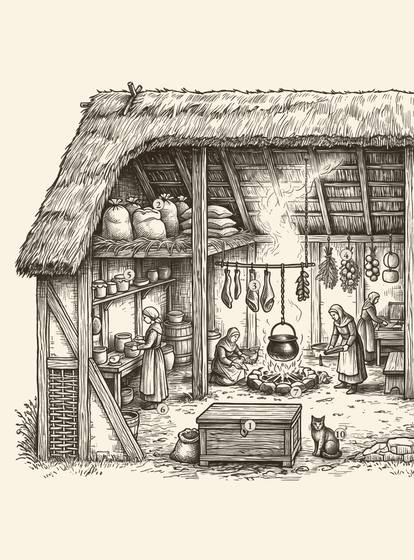
  • Illustration from Before the Potato, The winter cottage: A teaching cutaway of a winter house around 1300, with stores in every corner and rafter.
    The winter cottage A teaching cutaway of a winter house around 1300, with stores in every corner and rafter.
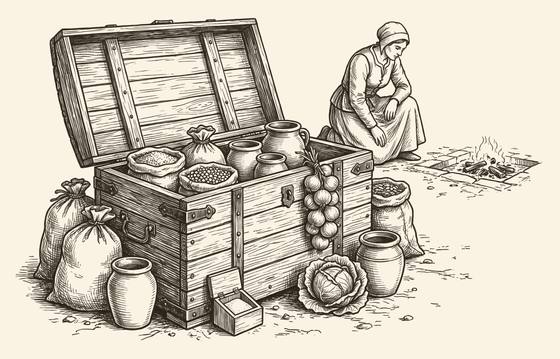
  • Illustration from Before the Potato, Packing the stores: Sacks, crocks, and roots packed away for the months ahead.
    Packing the stores Sacks, crocks, and roots packed away for the months ahead.
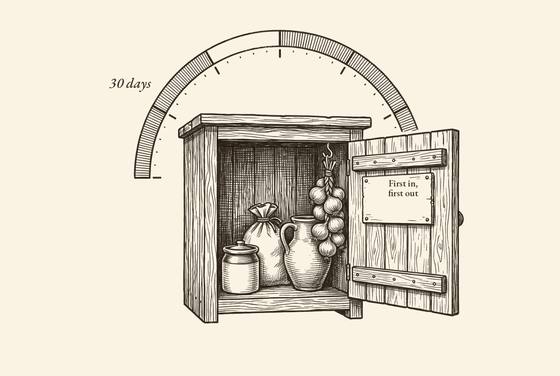
  • Illustration from Before the Potato, The thirty-day closet: A month of food in an ordinary cupboard, the modern end of the peasant habit.
    The thirty-day closet A month of food in an ordinary cupboard, the modern end of the peasant habit.

About the Author

Jeffrey Gray is a cybersecurity veteran and poet. He wrote Before the Potato to recover the ordinary skills behind the medieval English table, and to show how a modest version of that habit still works in an ordinary cupboard.

The book is a food history drawn from the historical record, with a glossary, a recipe index, and a full list of sources at the back. Modern storage and preserving notes follow current USDA and National Center for Home Food Preservation guidance.

He is also the author of the novel The Circuit of Eve.

Before the Potato cover

History you can eat.

From the harvest of 1314 to your own cupboard.

Available now on Amazon, in Kindle, paperback, and hardcover.

If you are buying it as a gift, start with the hardcover.

246 pages · Published November 24, 2026 · Paperback ISBN 979-8145722086 · Hardcover ISBN 979-8145731385